The Dark Origins of Christmas
It’s that time of year again when Christmas has seemingly come out of nowhere. Just a few more weeks and the big day will be here! Whether you are an avid Christmas fan with your tree decorated and presents wrapped, or you prefer to go into hibernation mode over the festive period, this look into the darker origins of Christmas will surely get you in the spirit.
Though Christmas is all sugar plum fairies and candy canes now, it wasn’t always that way!
TLDR: The modern celebration of Christmas has dark, non-Christian origins rooted in ancient midwinter pagan traditions:
- Yule (Scandinavia): A celebration of the Winter Solstice (Dec 21-Jan) to mark the end of the worst cold, involving large feasting and log burning.
- Oden (Germany): Midwinter was a fearful time when people believed the pagan god Oden flew through the night, observing and deciding who would prosper or perish.
- Saturnalia (Rome): A Roman festival of hedonism, feasting, and temporary freedom for enslaved people.
- Krampus: The terrifying, half-goat, half-demon figure from Austro-Bavarian cultures who, unlike Santa, punished misbehaving children on December 5th (Krampusnacht).
- Ban: Christmas celebrations were actually banned in England, Scotland, and Ireland between 1647 and 1660 under Oliver Cromwell.
Contents
Where did the Christmas holiday originate?
Where did Santa Claus originate?
Where did the Christmas holiday originate?
The middle of winter has long been celebrated throughout history. In Scandinavia, the Norse celebrated The Winter Solstice, or Yule, from 21st December to January. The Winter Solstice was a time to celebrate that the worst of winter was over, and people could look forward to longer days with more sunlight on the way.
The men in the family would bring home large logs to burn, and people would feast until the logs burned out. The belief was that each spark from the fire represented a new pig or calf that would be born in the coming year. Ultimately, everyone was celebrating the fact that they were the ones to have survived another winter.

In Germany, midwinter was a time to honour the pagan god Oden, who the German people highly feared. They believed Oden would fly through the night, observing people and deciding whether they would prosper or perish, leading people to stay indoors.
Saturnalia and Mithra
In Rome, where winters were less harsh, they celebrated Saturnalia in honour of Saturn, the god of agriculture. Saturnalia was a time of hedonism, with feasts and festivities. Roman enslaved people were given temporary freedom, and businesses and schools were closed so everyone could celebrate.
Juvenalia was also celebrated at a similar time, a feast honouring the children of Rome. The Roman upper classes also celebrated the birthday of Mithra on the 25th of December. Mithra is the god of the unconquerable sun, and this was the most sacred day of the year for some Romans.
These early instances of celebration led to the modern iteration of Christmas we have today.

What is Christmas?
Christmas is a Christian holy day marking the birth of Jesus, who Christians believe is the son of God. Though Christmas is most commonly celebrated on 25th December, Orthodox Christians celebrate Christmas on 7th January as they follow the Julian calendar rather than the Gregorian calendar. Orthodox Christians most commonly follow the Julian calendar in eastern European countries like Ukraine, Georgia, Russia, Serbia, Greece and North Macedonia.
Christmas is celebrated differently by different countries, religions, and even families. For most people, it tends to involve gathering with loved ones, eating, drinking, being merry and exchanging gifts.
Where did Santa Claus originate?
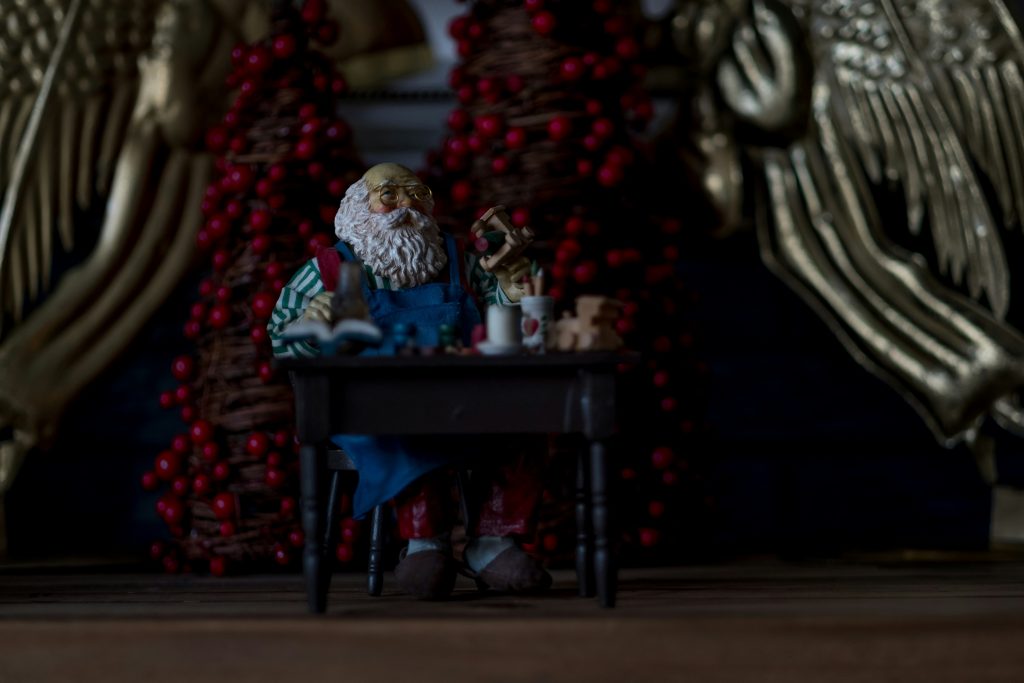
Whether you call him Santa Claus, Father Christmas, or St Nicholas, the legend of this festive figure varies from culture to culture. From his earliest days, Santa was an allegorical figure, a symbol of Christmas time and a benevolent figure with a charitable nature.
In Scandinavian culture, the same figure appears as Sinterklaas, who eventually made his way to America by the end of the 18th century as Santa Claus – a magical being who flew from house to house delivering presents to deserving children, but what happened to the not-so-deserving?
Who is Krampus?
It wouldn’t be very gothic if we didn’t mention Krampus!
Santa wasn’t the only creature visiting houses during the Winter Solstice. In Belgium, the Netherlands and Austro-Bavarian cultures, misbehaving children could expect a visit from the terrifying Krampus, a half-goat, half-demon that, at best would leave a lump of coal and, at worst, would kidnap the child, never to be seen again!

If any naughty children thought they would get away with a couple of weeks of good behaviour before Christmas, they’d be in for a shock – Krampus wouldn’t wait until Christmas Day to punish the unworthy. Krampusnacht continues to be celebrated across many European regions on 5th December. Combining Christian traditions with pagan roots, Krampusnacht sees parades, offerings of Krampuslauf (schnapps) and the exchanging of Krampuskarten (greeting cards depicting the terrifying Krampus).
When Christmas was banned
When Oliver Cromwell was Lord Protector of the Commonwealth of England, Scotland and Ireland (surely they could have come up with a snappier name) between 1653 and 1658, he was known for his strict rules and legislation. In 1647, a ruling abolishing festivals was passed, meaning Christmas celebrations, Easter and Whitsuntide (the weekend) were strictly forbidden. Even in the home!
Cromwell turned this up a notch by instructing shops and businesses to stay open on the 25th of December and deploying soldiers to patrol the streets, seizing any food or drinks they discovered being prepared for festive celebrations.
Needless to say, the ban was unpopular and largely unenforceable outside of London. Riots broke out in opposition to the ruling in some cities, but Christmas remained illegal until the Restoration in 1660.
A more wholesome Christmas
Previously a time of hedonism and a huge festive celebration, Christmas evolved to prioritise peace, rest and family time. In 1843, Charles Dickens wrote A Christmas Carol, which spread a message of charity and kindness resonating with English and American cultures. A Christmas Carol has become a cherished tale. Even The Muppets made a film adaptation of it! And what better way to bring everyone together than with Kermit the Frog himself?

As Christmas became even more popular in America, it was reinvented as the perfect family holiday. Old customs lifted straight from the pagan days, such as decorating trees, sending cards to family and friends and exchanging gifts, became an essential part of the Christmas tradition. Eventually, this commercialised reinvention became the accepted celebration of Christmas worldwide.
Since then, Christmas celebrations haven’t changed much, but we’ve spotted some of our favourite hedonistic elements of the ancient Winter Solstice traditions creeping back in: eating, drinking & being merry!
Get Christmas-ready with Gothic gifts at Attitude Clothing
Now you’re in the Gothic Christmas spirit, why not browse our selection of gifts and homeware? Perfect for any alt-enthusiast in your life or as a little treat to yourself, our gift collection features everything from soft plushies to relaxing candles and incense. Why not check out our gift guide for more inspiration? Browse the full collection and complete all your Christmas shopping with Attitude Clothing!
Comments are closed here.